
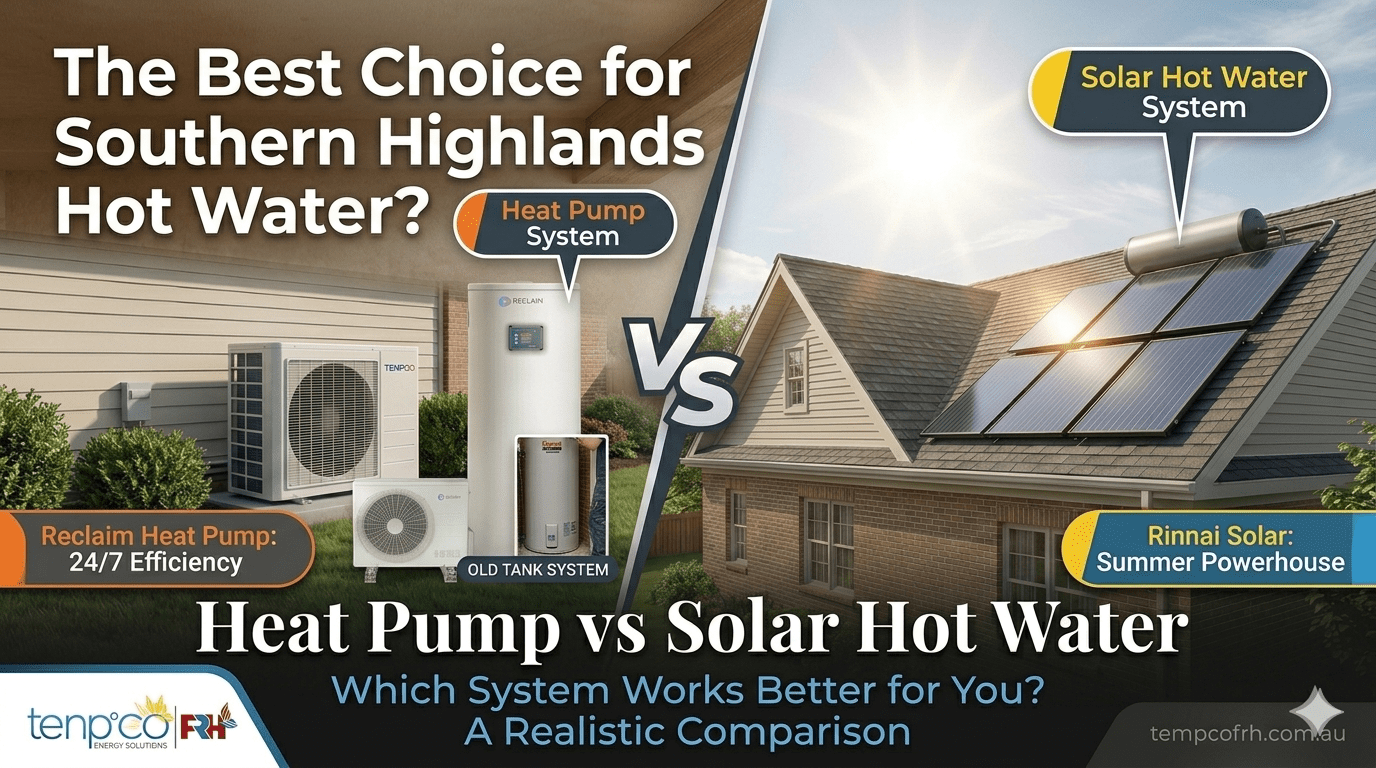
Choosing between a heat pump hot water system and a solar hot water system is one of the most common questions Australian homeowners ask when upgrading from gas or electric storage. Both cut energy bills and qualify for government rebates. But they are fundamentally different technologies that suit different homes and climates.
This guide gives you a straight comparison across cost, running expenses, installation, and reliability so you can make the right call for your home.
| ⚡ Quick Answer For most Australian homes, especially in cooler or variable climates like the NSW Southern Highlands, a heat pump hot water system delivers more consistent year-round performance with simpler installation. Solar hot water excels in high-sun regions but requires a gas or electric booster during winter or overcast periods. |
How Each System Heats Your Water
Heat Pump Hot Water System Technology
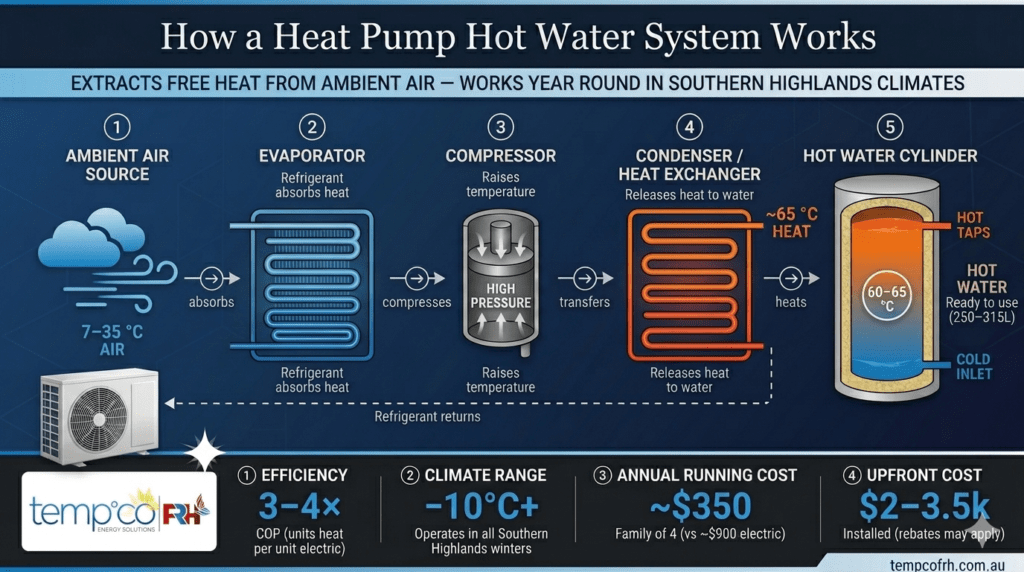
A heat pump works like a reverse refrigerator. It extracts heat from the surrounding air, compresses it using a refrigerant cycle, and transfers that heat to the water in the storage tank. It runs on electricity, but uses a fraction of what a conventional electric water heater consumes.
- Runs on electricity, no sunlight required
- Operates in ambient temperatures from -10°C to 43°C
- No roof collectors, no roof penetrations
- Works independently or powered by excess solar from your rooftop solar PV system
- Available in 250L (up to 3 bedrooms) and 315L (up to 5 bedrooms)
The Daikin CO2 Hot Water Heat Pump achieves a nominal COP (Coefficient of Performance) of 6.15, meaning it generates up to six units of heat for every one unit of electricity used. That makes it up to six times more efficient than a standard electric resistance heater or gas water heater.
Tempco Energy is a licensed installer of brands like Daikin, Rinnai, Stiebel, and Reclaim. View our heat pump hot water range to get a closer look.
Solar Hot Water System Technology
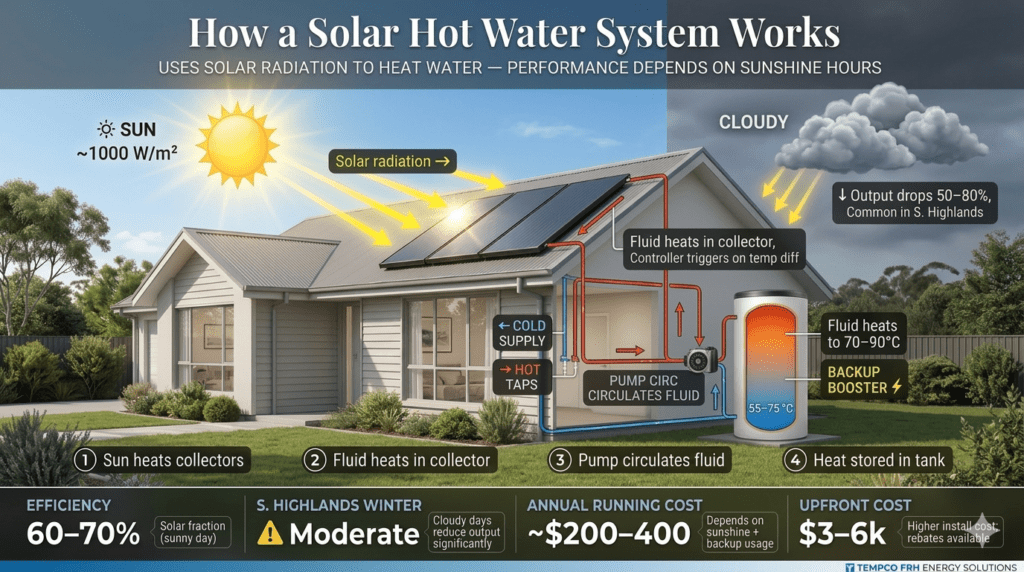
A solar hot water system (also called a solar water heater) uses roof-mounted collectors, either flat panels or evacuated tubes, to capture the sun’s thermal energy and heat water stored in a solar hot water tank.
This is a thermal system, not a solar PV system. It collects heat directly from the sun rather than generating electricity. When solar energy is insufficient, a gas or electric booster heats the remaining water.
- Requires north-facing, unshaded roof space for collectors
- Performance tied directly to daily sunlight hours
- Needs a booster (gas or electric) during winter or overcast days
- Separate from your solar PV system, the two technologies do not directly interact
- Often referred as solar heat pumps when paired with a heat pump booster
| 💡 Solar Hot Water with a Heat Pump Booster Some solar hot water systems use a heat pump as the booster instead of a resistive element or gas. This solar heat pump hot water system can offer good efficiency in the right climate but adds installation complexity and cost. |
If you are looking for some good hot water options then visit our heat pump hot water product page.
Solar Hot Water vs Heat Pump: Upfront Cost and Installation
Installation cost and complexity differ significantly between the two systems. Here is a direct breakdown.
| Heat Pump Hot Water | Solar Hot Water |
| Lower to mid-range installed costGround-level installation, no roof work. | Mid to higher range installed costRoof-mounted collectors require structural assessment. |
| No roof penetrations or structural assessment. | Water pipes run between roof and ground-level tank. |
| Pre-configured kit for fast, straight forward install. Installed by Daikin-appointed Hot Water | Roof penetrations required. |
| Installed by Daikin-appointed Hot Water Specialists. | Higher labour cost and longer install time. |
| Typical install time: half to one day | Panel or evacuated tube positioning critical for output. |
Government Incentives And Rebates
Both systems are eligible for Small-scale Technology Certificates (STCs) under Australia’s renewable energy incentive scheme, reducing the out-of-pocket purchase price. The STC value depends on your postcode zone and system size.
| 💡 Quick Tip: STCs and Rebates Always ask your installer for a current STC estimate before comparing prices. The rebate reduces the upfront cost of both systems, but the net saving varies by location. |
If you’re still running a gas water heater and the oudated heating system or weighing up your options, our ducted gas heating buyer’s guide covers the full cost and efficiency picture.
Solar vs Heat Pump Hot Water: Running Costs and Energy Efficiency
Both systems outperform conventional electric water heaters and gas water heaters on running cost. The difference between them comes down to how consistently they perform.
| Heat Pump Hot Water | Solar Hot Water |
| 1-Up to 6x more efficient than standard electric resistance heatingLow running cost year-round, regardless of weatherSchedule to run during peak solar generation for near-zero cost. | 1-Very low running cost in high-sun regionsRunning cost rises significantly in winter or overcast periodsBooster (gas or electric) adds cost when solar energy is insufficient. |
| 2-Auto Adaptive Mode learns your usage habits over 7 days. | 2-No smart scheduling, output depends on daily sun hoursLimited control over heating times or energy source. |
| 3-Scheduling Mode aligns heating with off-peak rates or solar export, heat Boost Mode delivers 80L of hot water in 60 minutes. | 3-Gas booster adds ongoing gas tariff exposure |
If you already have a solar PV system on your roof, a heat pump hot water system is often the smartest investment. You can set it to run between 10am and 3pm, drawing from excess solar energy rather than the grid. Daikin’s Scheduling Mode is built for exactly this.
Solar power hot water systems, whether solar thermal or heat pump paired with solar PV, both outperform gas water heaters on long-term running cost, particularly as gas tariffs continue rising across Australia.
| 💡 Quick Tip: Pairing a Heat Pump with Your Existing Solar PV If you have a 5kW or larger solar PV system, scheduling your heat pump to run during peak generation hours effectively produces hot water from free solar energy. The Daikin unit’s auto adaptive mode and scheduling mode make this straightforward to set up without a separate energy management system. |
Performance and Reliability
Reliable hot water is non-negotiable. This is where the two systems diverge most clearly, especially in cooler Australian climates.
| Heat Pump Hot Water | Solar Hot Water |
| Consistent output 365 days, unaffected by cloud or coldOperates from -10°C to 43°C ambient (Daikin CO2 unit). | Output varies with season and cloud coverWinter performance drops sharply in southern or highland climates. |
| 2-Auto Adaptive Mode learns your usage habits over 7 days. | Heat loss from roof collectors overnight, especially in cold regions. |
| No heat loss from roof-mounted collectors overnight. | Booster required for consistent supply in winter months. |
| Quiet operation at 38 dB(A), suitable for residential areas. | Warranty terms vary significantly by brand. |
| Duplex stainless steel tank resists corrosion long-term10-year parts and labour warranty (Daikin). | Silent operation, no moving parts in the collector system |
For homes in frost-prone regions, the heat pump’s ability to extract heat from cold ambient air is a significant practical advantage. Unlike solar hot water, which loses stored heat through the collector panels on cold nights, the heat pump heats on demand and maintains a consistent water temperature regardless of conditions.
Storage hot water systems are also a reliable option if you are looking for efficient and cost effective options.
Heat Pump Hot Water vs Solar: Roof Space and Compatibility
Your property layout and existing setup will influence which system is practically feasible.
Heat Pump Hot Water: What You Need
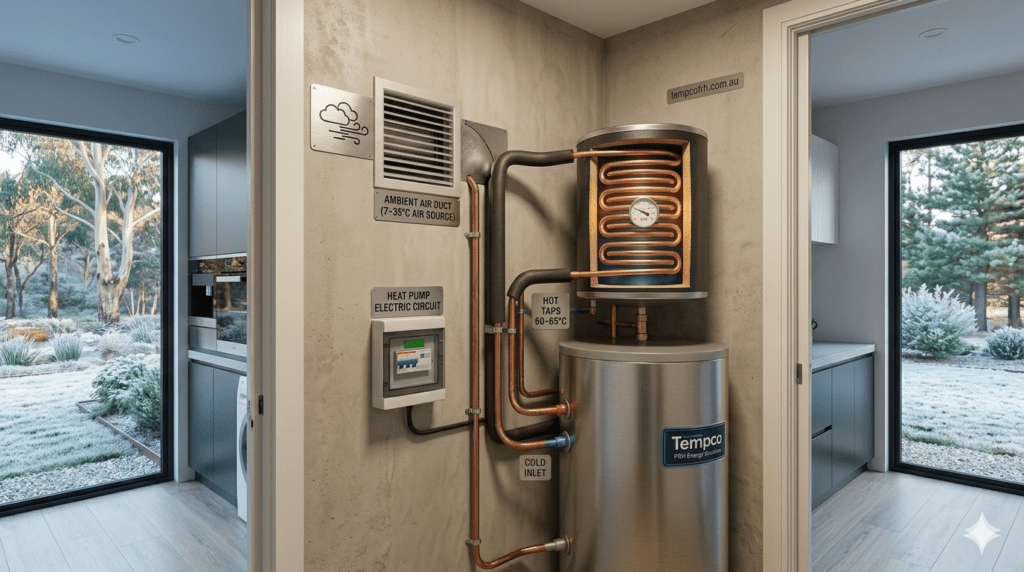
- No roof space required
- Ground-level placement with adequate airflow (approximately 1m clearance recommended)
- Standard single-phase 230-240V power supply
- Connects directly to existing plumbing, minimal disruption
- Works alongside existing rooftop solar PV panels without competing for space
- Split system options available if ground space is limited
Solar Hot Water: What You Need
- North-facing, unshaded roof area for collectors
- Structural roof assessment before installation
- Water pipes from roof to ground-level solar hot water tank
- Gas or electric booster connection
- Roof space already used by solar PV panels cannot accommodate solar collectors
Homes replacing an existing gas water heater or standard electric storage system will generally find heat pump installation simpler, faster, and less disruptive than solar hot water installation.
Heat Pump vs Solar Hot Water: Full Comparison at a Glance
Use this as a quick reference when evaluating solar hot water systems vs heat pump systems for your home.
| Factor | Heat Pump Hot Water | Solar Hot Water |
| Upfront Cost | Lower to mid-range | Mid to higher range |
| Running Cost | Very low, year-round | Very low in high sun; higher with booster use |
| Roof Space Required | No | Yes, north-facing unshaded |
| Cold or Cloudy Performance | Full output to -10°C | Reduced, booster required |
| Works with Solar PV | Yes, direct pairing | N/A (separate technology) |
| Installation Complexity | Low to moderate | Moderate to high |
| Government Rebates (STCs) | Yes | Yes |
| Smart Controls | Yes, app, scheduling, adaptive mode | Limited |
| Noise | 38 dB(A), ultra-low | Silent |
| Warranty (Daikin) | 10-year parts and labour | Varies by brand |
| Best Climate | All climates, especially cool or variable | Consistently high-sun regions |
Solar Hot Water or Heat Pump: Which One Is Right for You?
Here is a simple way to decide.
Choose a Heat Pump Hot Water System If:
- You are in a cooler or variable climate such as Southern Highlands, ACT, Victoria, or Tasmania
- You already have rooftop solar PV and want to power your hot water from excess generation
- Roof space is limited or occupied by solar panels
- You want consistent hot water supply regardless of season or weather
- You want smart scheduling, app control, and a comprehensive manufacturer warranty
- You are replacing a gas or electric storage system with minimal disruption
Solar Hot Water May Suit Your Home If:
- You are in a consistently high-sun region such as Queensland, WA, or the Northern Territory
- Hot water usage is lower and predictable, so booster reliance stays minimal
- You have ample unshaded north-facing roof space not occupied by solar PV panels
- You have access to cheap off-peak electricity or gas for boosting
For the majority of Australian homeowners, particularly those in the Southern Highlands, ACT, and southern NSW regions, a heat pump hot water system offers better year-round performance, simpler installation, and long-term savings that equal or exceed those of solar water heater systems over a typical 10 to 15 year lifespan.

Ready to Upgrade Your Hot Water System?
Tempco FRH Energy Solutions installs and service heat pump hot water systems across Mittagong, Bowral, Moss Vale, Robertson, Goulburn, and the Southern Highlands. We are fully licensed and experienced in local climate conditions. Book a no-obligation site assessment or explore our hot water range to find the right system for your home.