

Your hot water system usually gives you plenty of warning before it fails completely. Rusty water, odd noises, or a system that can no longer keep up with your household, these are signs worth acting on before you end up with no hot water and an urgent replacement bill.
Here are the seven signs we see most often at TempcoFRH Energy Solutions, and what each one typically means.
1. Your Water Temperature Is Inconsistent
If your shower swings between scalding and cold, or the water just isn’t as hot as it used to be, your thermostat or heating element is likely starting to fail.
In electric storage systems, sediment builds up at the bottom of the tank over time and insulates the heating element. The element works harder to heat through it and gradually becomes less effective. In gas systems, a degrading burner produces the same result: inconsistent heat delivery, in that case you may need to repair the hot water system.
| Quick check: Confirm your thermostat is set to at least 60°C: that’s the Australian standard minimum for preventing bacterial growth. If the setting is correct and the problem continues, the issue is internal and worth having inspected. |
2. You Hear Banging, Popping, or Rumbling from the Tank
A healthy hot water system runs quietly. Banging, popping, or rumbling noises usually point to sediment buildup at the bottom of the tank.
As minerals from your water supply settle and harden inside the tank, the heating element has to push through that layer to do its job. The sediment shifts and cracks under the heat, creating those sounds. Left unaddressed, it puts extra strain on the tank and shortens its life.
3. Your Hot Water Looks Discoloured or Rusty
Brown or reddish water coming from your hot taps is a clear sign of internal corrosion. The key distinction: if only the hot water is discoloured (not the cold), the tank itself is the source.
Storage hot water systems use a sacrificial anode rod to protect the tank walls from rust. When that rod wears out and isn’t replaced, the tank starts to corrode from the inside. Rusty water usually means the corrosion is already well advanced, and replacement is the most reliable path forward.
| Also watch for smell: A sulphur or “rotten egg” smell from hot water taps often accompanies a depleted anode rod. It’s a different issue from scale and warrants a professional inspection. |

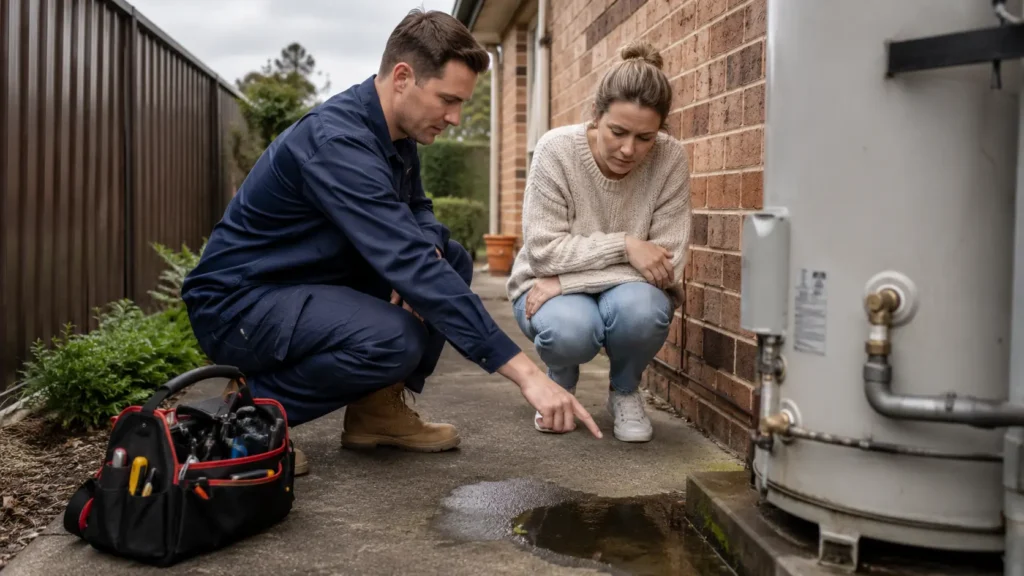
4. You Notice Water Pooling Around the Unit
Any moisture around the base of your hot water system needs attention straight away. It might look minor, but it usually signals something more serious inside.
Common causes include:
- Corrosion or cracks in the tank walls: not repairable, replacement is unavoidable
- A faulty pressure relief (P&T) valve: this safety valve releases pressure if the system overheats; constant dripping or a visible stream means it needs attention
- Loose pipe fittings: sometimes a straightforward fix, but still worth a proper check
If you find pooling water, turn off the cold water supply to the unit and call a licensed tradesperson. Water damage to flooring and walls can escalate quickly.
5. Your Energy Bills Have Gone Up Without Explanation
A hot water system that’s working harder than it should uses more energy. If your gas or electricity bills have crept up but your household usage hasn’t changed, the hot water system is a logical first thing to check.
Sediment buildup, a failing thermostat, or degraded tank insulation can all force the system to run longer and reheat more often than it needs to. An efficiency check can confirm whether the system is still operating within its rated parameters.
6. You’re Running Out of Hot Water Faster Than You Used To
If your household hasn’t changed but the hot water runs out much sooner, the system’s effective output has likely dropped.
In storage systems, sediment takes up physical space at the bottom of the tank. A tank with heavy buildup holds less usable hot water and takes longer to reheat what’s left. In instantaneous gas systems, a degrading heat exchanger reduces the volume of hot water the unit can produce per minute, most noticeable during back-to-back showers.
If your system has stopped producing hot water altogether, our guide on why your hot water is not working explains the most common causes and what to check before calling a technician.

7. The System Is Over 10 Years Old
Age alone doesn’t mean a system is about to fail, but it does change how you interpret every other sign on this list. A noise in a two-year-old unit might be nothing. The same noise in a 12-year-old unit is a different matter.
Here’s a straightforward lifespan guide for the most common system types:
| System Type | Typical Lifespan |
| Electric storage | 8 to 12 years |
| Gas storage | 8 to 12 years |
| Gas instantaneous | 15 to 20 years |
| Heat pump hot water | 10 to 15 years |
If your system is approaching or past these ranges and showing any of the signs above, a proactive assessment makes more sense than waiting for a complete failure. Lifespan varies by system type, maintenance, and water quality. Learn how long a hot water system lasts and the factors that affect its service life.
| Repair or replace? A useful rule of thumb: if the repair cost is more than roughly half the cost of a new system, and the unit is already past the midpoint of its lifespan, replacement usually works out better value in the long run. |
What to Do If You Notice These Signs
Not every warning sign means you need a full replacement. A worn thermostat, a failing anode rod, or a faulty pressure relief valve are often straightforward repairs. Internal tank corrosion is not repairable.
The right call depends on the age of your system, how many signs are present, and the cost of the specific repair versus the cost of a new unit. A licensed tradesperson can give you a straight answer.
If your hot water system is giving you trouble, we’re here to help. At TempcoFRH Energy Solutions, we supply and install Rinnai gas systems, Daikin heat pump hot water, and a range of other quality brands suited to Southern Highlands homes and households across our service area.
Signs Your Hot Water System is Failing at a Glance
| Sign | Likely Cause | Action |
| Inconsistent temperature | Failing thermostat or heating element | Arrange inspection |
| Banging or popping noises | Sediment buildup in tank | Inspect and assess system age |
| Rusty or discoloured hot water | Internal corrosion, depleted anode rod | Replacement likely needed |
| Water pooling around the unit | Tank leak or faulty relief valve | Turn off supply, call a tradesperson |
| Rising energy bills | Sediment, degraded insulation, or ageing parts | Efficiency check recommended |
| Running out of hot water faster | Sediment reducing capacity | Assess system age and condition |
| System over 10 years old | Approaching end of rated lifespan | Proactive assessment advisable |