


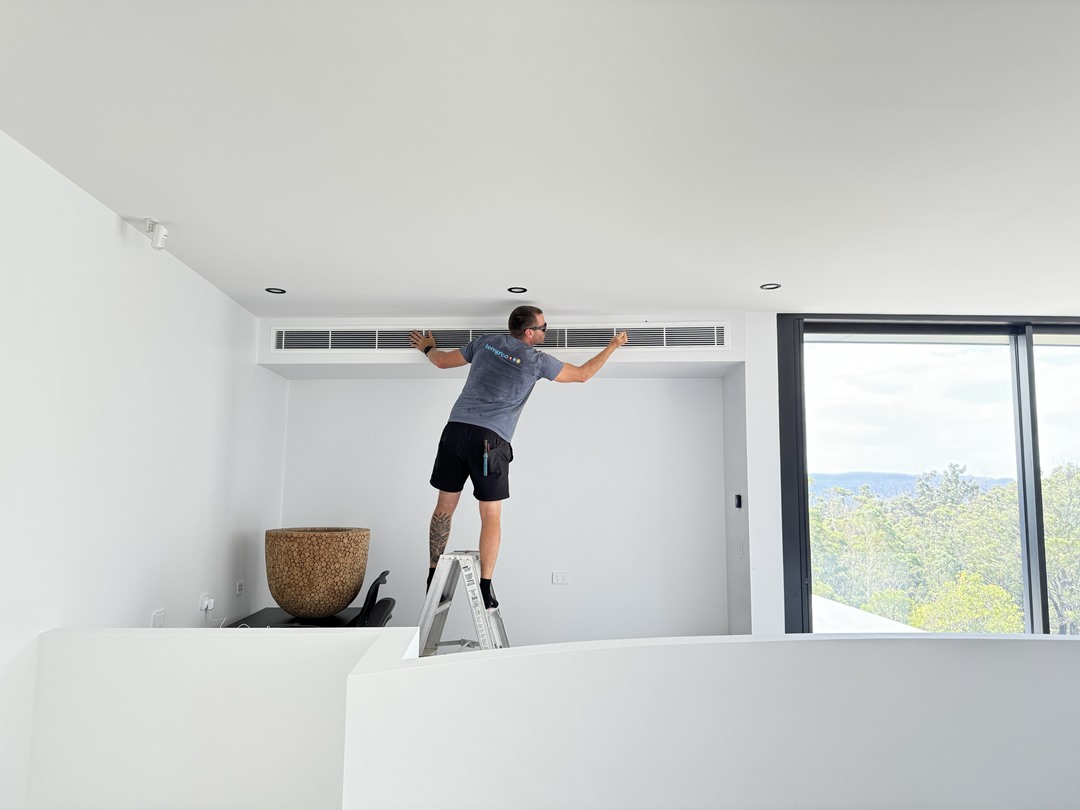
Cleaning a ducted air conditioning filter takes about fifteen minutes, needs no tools beyond a vacuum cleaner or a garden hose, and is the one maintenance job that makes the biggest difference to how the system runs. A blocked filter chokes airflow to every room, pushes power bills up and makes the fan work harder for less.
Most people never do it because they do not know where the filter is. On a ducted system it is behind the return air grille, which is the large vent usually in a hallway ceiling or high on a hallway wall. This guide covers how to find it, how to clean it, how often, and when to stop and call a technician instead.
Why cleaning the filter matters
The filter on a ducted air conditioner catches dust, pet hair and pollen before the air reaches the indoor unit in the roof. When it clogs, less air gets through, and three things happen.
The system works harder. The fan runs at the same speed but moves less air, so rooms take longer to reach temperature and the unit runs for longer to get there. That shows up on the power bill.
The indoor unit gets dirty. Dust that gets past a clogged or damaged filter settles on the coil inside the unit, where it reduces efficiency and can hold moisture and grow mould. Cleaning a coil is a technician’s job. Cleaning a filter is yours.
Indoor air quality drops. The filter is the only thing standing between the roof space and the air you breathe. A dirty one does less, and a torn one does nothing.
How often should you clean a ducted air conditioner filter?
Every three months is a sensible default for a Southern Highlands home. Monthly if you have pets, live on a dirt road, or run the system most of the day through winter and summer.
Usage drives it more than the calendar. A system that runs for heating from June to August and cooling from December to February is moving a lot of air through that filter in those months, and much less in between. Check it at the start of each season and again partway through, and you will see quickly how fast yours loads up.
If the controller has a filter reminder light, it is usually set to a run time rather than a date, which is a better guide than a fixed schedule.
What type of filter do you have?
Ducted systems from Daikin, Rinnai and General (Fujitsu) use one of two filter types, and the cleaning method depends on which one is behind your grille.
Washable mesh filter. A fine mesh in a plastic or metal frame. This is the most common type on Australian ducted systems. It can be hosed, vacuumed and reused indefinitely as long as the mesh is intact.
Pleated disposable filter. A pleated paper or synthetic filter in a cardboard frame, sometimes fitted as an upgrade for households with allergies. These are not washable. Vacuum lightly to extend their life, and replace them when they are grey through.
If you are not sure which you have, pull it out and look. A mesh filter is see through when clean. A pleated filter is opaque.
How to clean the filter, step by step
Switch the system off at the wall controller first and wait for the indoor unit to stop. You do not want the fan pulling loose dust into the unit while the filter is out.
- Find the return air grille. It is the largest vent in the house, usually in a hallway ceiling or high on a hallway wall. Supply outlets in each room are smaller and have no filter behind them.
- Open the grille. Most hinge down after you release two clips, thumb screws or a latch on one edge. Support the grille with one hand while you release it so it does not swing and crack.
- Slide the filter out. It sits in a frame on the back of the grille or in the duct opening above it. Note which way round it goes. Some have an airflow arrow, and a photo on your phone saves guessing later.
- Take it outside. Shaking a filter inside puts three months of dust back into the house.
- Vacuum or hose it. For a light build up, vacuum both sides with a brush attachment. For a heavy one, hose it from the clean side so the water pushes the dust out the way it came in. Use a gentle spray. A pressure washer or a stiff brush will tear the mesh.
- Wash if needed. A greasy or sticky filter, common near kitchens, can go in a tub of warm water with a little dishwashing detergent. Rinse it clean.
- Dry it completely. Stand it in the shade until it is fully dry. A damp filter put back into the roof will grow mould. If the frame is plastic, keep it out of direct sun so it does not warp.
- Wipe the grille. While the filter dries, wipe dust off the grille louvres with a damp cloth or vacuum them.
- Refit. Slide the filter back the same way it came out, close the grille and secure the clips. Reset the filter reminder on the controller if there is one, then switch the system back on.
For a pleated disposable filter, do steps 1 to 4, vacuum lightly, and replace it if it is grey through or damaged.
When to call a technician instead
Clean the filter yourself. Leave the indoor unit, the coil, the ductwork and the outdoor unit to a licensed technician.
Call us if any of these apply:
- The filter is clean but airflow is still weak in some or all rooms. That usually points to a blocked coil, a stuck zone damper or a duct problem in the roof.
- There is a musty smell when the system starts, which suggests mould on the coil or in the ductwork.
- The system is tripping, icing up or leaking water.
- You cannot reach the grille safely. Hallway ceiling grilles in homes with high ceilings need a stable platform, not a kitchen chair.
- The filter is torn, warped or missing. Running without one lets dust straight onto the coil.
A routine service covers the coil, drain, refrigerant charge, zone dampers and electrical connections, none of which are visible from the grille. TempcoFRH services ducted air conditioning of all major brands across the Southern Highlands, and we hold ARC Licence AU51396.
Other maintenance that keeps a ducted system running well
Clear the outdoor unit. Leaves, grass clippings and garden beds that have grown up around it restrict airflow across the condenser. Keep a clear space around the unit and brush debris off the fins.
Keep supply outlets open and uncovered. Furniture pushed under a ceiling outlet or a rug over a floor outlet changes the airflow balance across the house.
Use the zones. Running every zone with every door closed makes the system work against itself. Our guide to ducted air conditioning zoning explains how to run it so each room gets what it needs.
Check the system is the right size for the house. A unit that is too small runs flat out and loads the filter faster. Our post on what size ducted air conditioner you need covers how sizing works.
A clean filter and sensible zoning are the two cheapest ways to keep running costs down. Both are covered in more detail in our guide to ducted air conditioning cost.
Frequently asked questions
Can I run the system without the filter while it dries? No. Dust goes straight onto the coil. Dry the filter fully before switching the system back on, or clean it at a time of day when you do not need the system running.
My ducted system has two grilles. Do both have filters? Larger homes sometimes have two return air grilles, and each has its own filter. Clean both.
Does cleaning the filter fix a system that is not cooling or heating properly? Sometimes. If performance picks up after a clean, the filter was the problem. If it does not, something further in the system needs looking at.
Do I need to clean the ductwork? Not routinely. Ductwork that is sealed and intact stays clean. If you can see dust blowing from outlets or there is a persistent smell, have a technician inspect the ducts.
Need a hand with your ducted system?
TempcoFRH installs and services ducted reverse cycle air conditioning across Bowral, Mittagong, Moss Vale, Berrima and the wider Southern Highlands. If the filter is clean and the system still is not right, call 02 4862 5595 to book a service.