


A split system air conditioner is cheaper to install and heats or cools one room. A ducted air conditioning system has a higher upfront cost and heats or cools the whole house from one unit. Which one suits you comes down to how many rooms you want conditioned, what your roof space looks like, and how you live in the house.
We install both across the Southern Highlands, and the question comes up on most quotes. This post goes through the differences the way we would on a site visit: how each works, what each costs to install and run, where each one is comfortable and where it falls short, and which homes suit which system.
How a split system works
A split system has one indoor unit mounted high on a wall and one outdoor unit, connected by refrigerant pipes. It conditions the room it is in and whatever air drifts through an open door.
Installation is a much smaller job than ducted. The indoor unit needs a wall with an outside face or a short pipe run to the outdoor unit, and a power circuit. Nothing goes in the roof.
A multi head split is a variation where one outdoor unit runs two to five indoor units in different rooms. It sits between a single split and ducted on cost and coverage, and it suits homes where ducted will not fit.
How a ducted system works
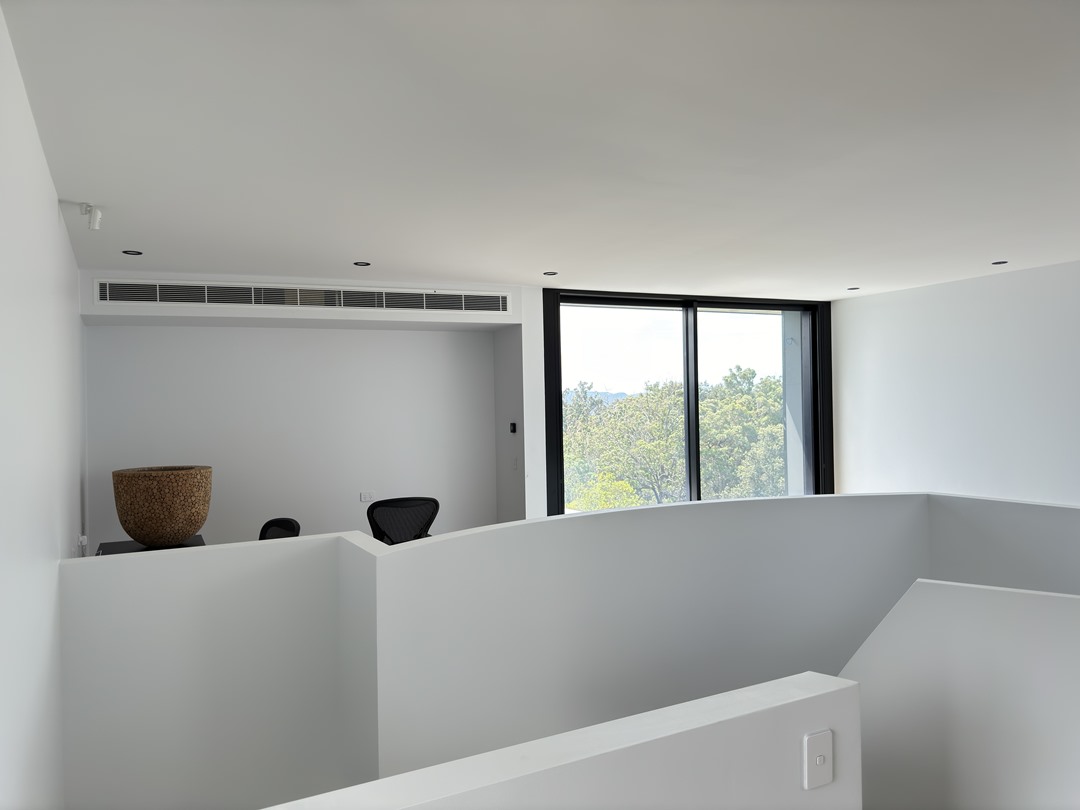
A ducted system has one indoor fan coil unit concealed in the roof space or under the floor, one outdoor unit, and insulated ductwork running to a ceiling outlet in every conditioned room. A return air grille, usually in a hallway, pulls air back to the unit.
Zone dampers in the ductwork let you run the living areas during the day and the bedrooms at night without conditioning the rooms in between. The only visible parts are the outlets, the return air grille and a wall controller.
Installation takes longer because of the ductwork, and the house needs somewhere to put the fan coil. Our ducted reverse cycle air conditioning page covers what is involved.

Ducted vs split system installation cost
A single split system costs a fraction of a ducted system to install. The comparison changes once you want more than two or three rooms conditioned.
Each split system needs its own indoor unit, outdoor unit, pipework and electrical connection. By the time a four bedroom home has a split in the living room, the main bedroom and two other bedrooms, the combined cost is in the same territory as a ducted system, and you have four outdoor units on the walls instead of one.
A ducted system’s installation cost is driven by floor area, the number of zones, roof access and electrical work. Our guide to ducted air conditioning cost goes through each of those.
So the honest rule of thumb is this. One or two rooms, split wins on installation cost every time. Whole home, the gap closes and ducted often comes out ahead once you count the units you would otherwise need.
Ducted vs split system running costs
Per room, a well zoned ducted system and a split system cost a similar amount to run. Per house, ducted is usually cheaper than running multiple split systems in every room, and more expensive than running one wall split in one room.
The reason is zoning. A ducted system heating two bedrooms overnight is doing about the same work as two splits doing the same job, through one more efficient outdoor unit. A ducted system running every zone all day is doing far more work than a single split, because it is conditioning far more space.
Three things shift the running cost either way:
- How many zones you actually use. People who zone properly get the low running costs. People who run the whole house all day do not. We explain how it works in our post on ducted air conditioning zoning.
- Duct losses. Ductwork in a hot roof space in summer or a cold one in winter loses some energy on the way to the room. Good insulation keeps this small. Split systems have no ducts, so no duct losses.
- Sizing. An oversized split short cycles and an undersized ducted system runs flat out. Either one costs more than a correctly sized unit. Our guide to what size ducted air conditioner you need covers the ducted side.
Energy efficiency: which system is more efficient?
A single split system air conditioner is more efficient than a ducted system for one room, because there are no duct losses and the unit is sized for that room alone. For a whole house, one ducted outdoor unit running at part load is usually more efficient than multiple split systems each cycling on and off.
Efficiency ratings on the energy label are measured per unit, so they do not settle the question on their own. What settles it is the match between the system and the job. A ducted reverse cycle system heating or cooling the whole home does that job efficiently. The same system heating one bedroom with every other zone closed does not, and a split would beat it. The upfront cost difference between the two is real, and the efficiency difference depends entirely on how much of the house you condition.
Comfort, noise and how the house looks
Ducted gives an even temperature through the home and keeps the equipment out of sight. Splits give room by room control and can be louder indoors.
With ducted, the indoor unit is in the roof, so the only sound in the room is air moving through the outlet. Each room reaches a similar temperature, and there are no indoor units on the walls, which matters in older Highlands homes with period features.
With splits, each room has its own temperature setting, which some households prefer. The indoor unit is visible and makes a low fan noise. Rooms without a unit stay at whatever temperature they were, so hallways and bathrooms are often cold in winter.
Heating in a Highlands winter is where ducted shows its value. Reverse cycle output falls as the outdoor temperature drops, and a ducted system sized for the heating load will hold the whole house at temperature on a frosty morning. A single split in the living room heats the living room.
Which system suits your home?
Choose ducted if you want the whole home conditioned, you have roof or underfloor space, and you are staying long enough to get the value from the installation. Choose a split if you want one or two rooms done, you are in an apartment or a home with no roof access, or the budget is the deciding factor right now.
A few situations we see often:
- New build or major renovation. Ducted, almost always. Running the ductwork before the ceilings go in is the cheapest it will ever be. The ducted systems we install for G.J. Gardner Homes in the Southern Highlands are a good example of this.
- Established three or four bedroom home with a clear roof space. Ducted usually wins on whole home comfort and resale. Splits win if you only use two rooms.
- Two storey home. Either works. Ducted needs a route for duct between floors, which can mean a bulkhead. Two zones, upstairs and downstairs, is the minimum.
- Older cottage with low or tight roof space. A slimline ducted unit sometimes fits. If not, a multi head split covers two to five rooms from one outdoor unit without ductwork.
- Apartment or unit. Split or multi head split. Ducted is rarely an option without the body corporate’s approval and a roof cavity.
- One cold living room. A single split system sized for that room. Ducted would be paying for coverage you do not need.
Frequently asked questions
Is ducted or split cheaper to run? Per room they are close. Ducted is cheaper than running splits in every room and more expensive than running one split in one room. Zoning decides most of it.
Does ducted need three phase power? Not usually for residential systems. Larger units for big homes sometimes do. We check the switchboard at quote stage and tell you if an upgrade is needed.
Can I have both? Yes. Some homes run ducted through the main house and a split in a detached studio or garage conversion where ductwork cannot reach.
Which brands do you install? Daikin, Rinnai and General (Fujitsu) for both ducted and split systems, with Mitsubishi Heavy Industries as an option where it suits the home.
Talk it through with a local installer
TempcoFRH has installed heating and cooling in the Southern Highlands since 1985, holds ARC Licence AU51396 and is an AIRAH member. If you are weighing up ducted against split for a home in Bowral, Mittagong, Moss Vale, Berrima or nearby, we can look at the house and tell you which one we would put in. Call 02 4862 5595 for a quote.