
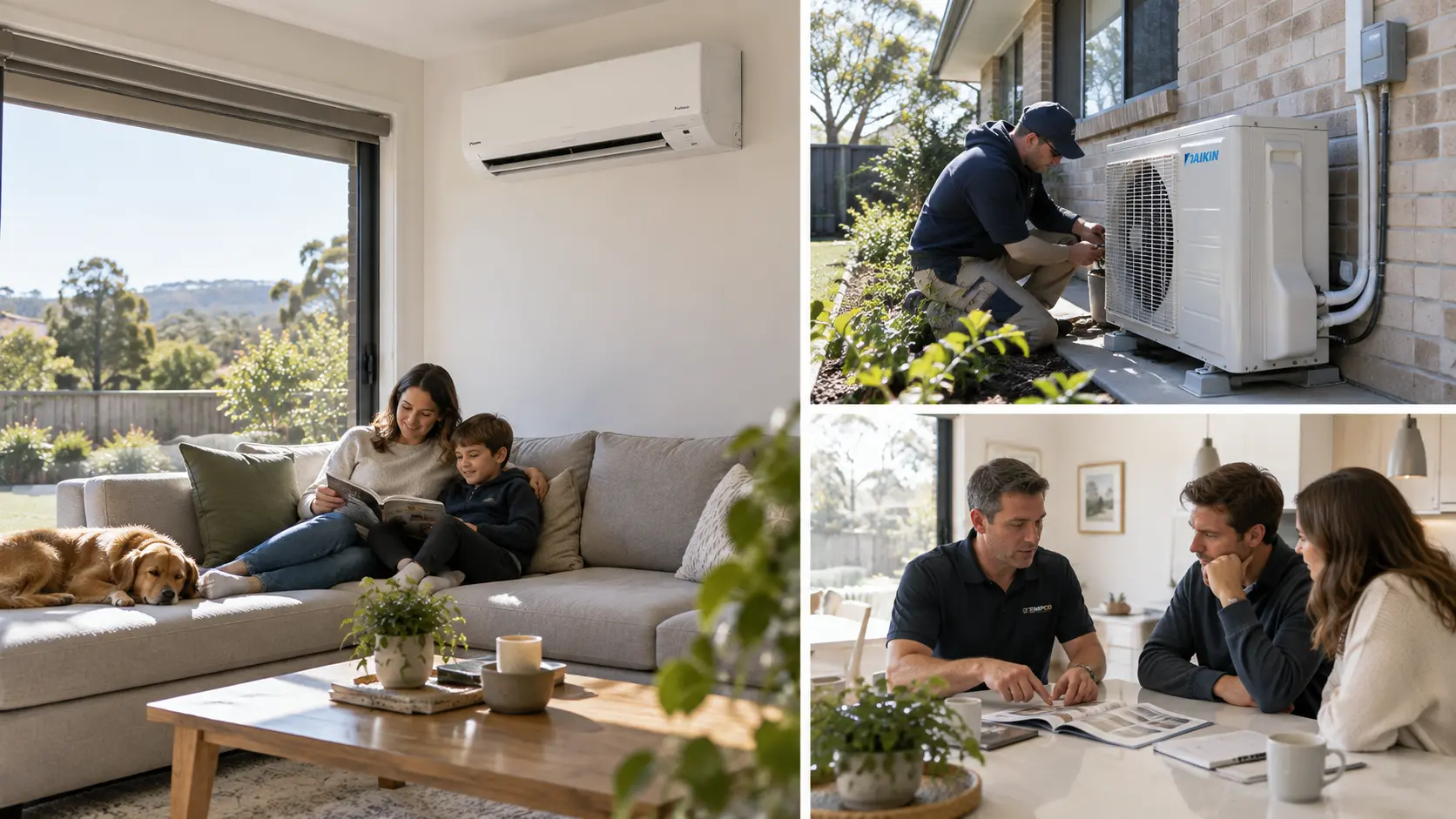
Air conditioner installation in Australia typically costs between ~$1,500 and ~$20,000, depending on the system type, size, and complexity of the job. A single split system sits at the affordable end; a fully ducted reverse cycle setup for a large home is a considerably larger investment.
That range is wide because no two installations are identical. The capacity you need, how easily the installer can route pipes and cables, the condition of your switchboard, and even the time of year can all shift the final figure. This guide breaks down what you can expect to pay, what drives prices up, and how to get a quote that reflects your actual situation.
Air Conditioning Installation Cost by System Type
The system type is the biggest cost driver. Here is what each option typically costs in 2026, including supply and a standard installation.
Split System Air Conditioner
A split system is the most common and affordable starting point. One wall-mounted indoor unit connects to an outdoor compressor via a short pipe run. It is ideal for heating or cooling a single room or open-plan space.
- 2.5kW (bedroom or small room, up to ~20m2): ~$1,500 to ~$2,500
- 5kW (living room or medium area): ~$1,800 to ~$3,500
- 7kW (large open-plan space): ~$2,200 to ~$4,800
Labour on a standard back-to-back install, where both units share the same wall, typically sits between ~$700 and ~$1,200. A longer pipe run, a second-storey location, or difficult wall access pushes that figure higher.
View our full range of air conditioners to compare systems across all three types.
Multi-Split (Multi-Room) Air Conditioner
A multi-split connects two to four indoor units to a single outdoor compressor. It suits homes where you need air conditioning in several rooms without committing to a full ducted system. Only one outdoor unit is needed, which is useful where outdoor space is limited.
- 2-head system: ~$4,200 to ~$5,500 supply and install
- 3 or 4-head system: ~$5,500 to ~$8,000 supply and install
Each additional indoor head adds roughly ~$1,000 to ~$1,500 to the base price. Because the outdoor unit is shared, a multi-split is generally more cost-effective than running separate systems for each room.
Ducted Reverse Cycle Air Conditioning
Ducted systems deliver heating and cooling throughout the entire home via a central unit and a network of ceiling vents. They are fully hidden inside the home and allow zone control, so you only condition occupied areas.
- Small home (3 to 4 zones): ~$10,000 to ~$14,000 supply and install
- Medium home (5 to 6 zones): ~$14,000 to ~$18,000 supply and install
- Large or complex home: ~$18,000 to $20,000+
Ducted systems have a higher upfront cost, but per-room pricing is often competitive when you need more than three or four rooms conditioned. Zoning reduces running costs meaningfully by heating or cooling only the areas in use.
| System Type | Typical Cost (Supply + Install) | Best For |
|---|---|---|
| Split System | ~$1,500 to ~$4,800 | Single rooms, apartments, targeted zones |
| Multi-Split (2 to 4 heads) | ~$4,200 to ~$8,000 | 2 to 4 rooms, limited outdoor space |
| Ducted Reverse Cycle | ~$10,000 to $20,000+ | Whole-home comfort, new builds, renovations |
What Affects Your Air Conditioning Installation Cost?
Two homes with the same system can produce very different quotes. These are the factors that move the price most significantly.
System Capacity (Kilowatts)
Air conditioners are sized in kilowatts (kW). Larger capacity means a higher unit cost and sometimes more complex installation. Getting the sizing right matters: an undersized unit runs constantly and never reaches your set temperature, while an oversized one short-cycles and leaves rooms feeling cold and clammy. A proper assessment of room dimensions, insulation, and sun exposure produces the right number. For a full breakdown, read our guide on what size aircon do I need.
Installation Complexity
A back-to-back split install, where the indoor and outdoor units share the same wall, is the most straightforward job. Costs climb when:
- The pipe run is longer than a few metres
- The outdoor unit sits on a roof, high bracket, or second-storey wall
- The walls are double-brick or have difficult internal cavities
- The drainage path for the indoor unit is hard to route
Always confirm what is included in your quote before comparing prices across installers.
Switchboard and Electrical Work
Most air conditioners require a dedicated circuit. If your switchboard is full or is an older fuse-style board, it may need upgrading before installation can proceed. A new circuit typically adds ~$200 to ~$500 to your total, while a switchboard upgrade can cost ~$500 to ~$2,000 depending on the scope of work required.
Brand and Efficiency Rating
Premium brands with higher energy efficiency ratings cost more upfront but return savings on running costs over the life of the system. At TempcoFRH, we supply and install Daikin, Rinnai, and General (Fujitsu), with Mitsubishi Heavy Industries also available. Each brand offers a range from entry-level models through to high-efficiency inverter systems. We help you match the right model to your budget and your home. For a closer look at one of our most popular brands, see our Daikin air conditioning guide.
Timing and Seasonal Demand
Demand for installations peaks in summer (December to February) and at the start of winter. Booking in autumn or winter generally means shorter lead times and more competitive pricing. Planning ahead also means your system is tested and ready before you actually need it.
Cold-Climate Models for the Southern Highlands
Standard reverse cycle units lose heating efficiency as outdoor temperatures drop. In Bowral, Moss Vale, Mittagong, and across the Southern Highlands, overnight winter temperatures regularly drop to -5 to -8 degrees Celsius. Cold-climate rated models are engineered to maintain strong heating output in these conditions. They typically cost 10 to 20 per cent more than a standard model, and in a Highlands climate, they earn that premium back in comfort every winter.
Replacing an Existing System vs Installing New
Replacing a like-for-like system on an existing installation is generally faster and less expensive than a brand new setup. If the pipework, wiring, and brackets are still in good condition, your installer can reuse them. You pay for the new unit and the connection work. If you are unsure which type of system to replace it with, our guide to what is reverse cycle air conditioning explains the options.
Costs increase on a replacement when:
- The existing copper pipe has degraded and cannot be reused safely
- The wiring no longer meets current Australian standards (AS/NZS 5149)
- The outdoor unit footprint or connection points differ from the replacement model
Ask your installer to assess what is reusable before committing. A good tradesperson will give you an honest breakdown rather than quoting for a full new installation when it is not necessary.
Costs That Can Catch You Out
Most quotes cover the unit and a standard installation. Some additional costs only emerge on the day. Knowing to ask about these upfront means you can compare quotes on equal terms.
- Removal of old unit: ~$100 to ~$300 depending on system size and safe disposal requirements
- Refrigerant reclaim or top-up (on replacements): variable; confirm with your installer
- Strata or body corporate approval: required for many apartments and townhouses. Allow several weeks for approval before scheduling the install
- Access equipment: scaffold or elevated work platforms for difficult upper-floor installs add to labour time and total cost
Asking for a fully itemised quote, rather than a single headline price, is the most reliable way to compare installers accurately. It is also worth checking current split system rebates for 2026, as government incentives can offset some of the upfront cost.
Running Costs: What to Expect After Installation
Installation is a one-off cost; electricity usage is ongoing. A reverse cycle split system typically costs ~$0.50 to ~$1.25 per hour to run for a smaller unit, rising to ~$1.25 to ~$2.00 per hour for a larger model. Ducted systems cost more overall, though good zoning reduces that considerably when only part of the house is in use. Regular servicing also protects efficiency over time; see our guide on how often to service your aircon for what to schedule and when.
Energy star ratings directly affect your power bill over time. Each additional star represents roughly a 10 per cent saving in running costs across the system’s lifespan. A more efficient model costs more upfront, but the difference narrows quickly over a few years of regular use. Look at both the purchase price and the running cost when you are comparing models.
Does Air Conditioner Installation Require a Licensed Tradesperson?
Yes. In New South Wales, air conditioning installation must be carried out by a tradesperson holding both an electrical licence and an ARCtick refrigerant handling licence, issued by the Australian Refrigeration Council. DIY installation is illegal under Australian standards (AS/NZS 5149), poses genuine safety risks, and voids the manufacturer warranty.
Ask to see your installer’s licences before work begins. A licensed tradesperson is accountable for the installation quality and the safe handling of refrigerants, which protects you if anything goes wrong later.
How to Get an Accurate Quote
Online pricing guides, including this one, give you a useful starting range. Your actual cost depends on your specific home, your chosen system, and the access conditions on the day. Here is how to get a figure that reflects reality:
- Have a licensed installer assess the site in person before accepting any figure
- Request a fully itemised quote separating the unit cost from the installation cost
- Confirm exactly what is included: brackets, pipe insulation, drainage, electrical connection, testing, and commissioning
- Ask whether your switchboard can handle the system you have chosen, or whether an upgrade is needed
- Collect two or three quotes and compare what each one covers, not just the final total
The cheapest quote is not always the best value. A thorough installation from an experienced tradesperson protects your warranty, ensures correct sizing, and avoids costly problems further down the track. Learn more about our airconditioning services and what is included at each stage.
Frequently Asked Questions
How long does it take to install a split system air conditioner?
A standard single split system installation typically takes 3 to 5 hours for an experienced team. More involved jobs, such as second-storey installs, multi-head systems, or those requiring switchboard work, may take a full day.
Can I install an air conditioner myself in Australia?
No. In New South Wales and across Australia, installation requires a licensed electrician and a refrigerant handling licence. DIY installation is illegal, unsafe, and voids the manufacturer warranty. Always use a licensed installer.
What size air conditioner do I need?
Capacity is measured in kilowatts. As a general guide, ~2.5kW suits a room up to about 20 square metres, ~5kW handles a medium living area, and ~7kW covers a large open-plan space. The right figure depends on your insulation, ceiling height, window area, and sun exposure. Your installer should calculate the correct capacity for your specific space.
Is reverse cycle air conditioning worth it in the Southern Highlands?
Yes. Reverse cycle systems provide both cooling and heating from a single unit, which makes them well suited to the Southern Highlands’ seasonal extremes. The key is choosing a cold-climate rated model that maintains heating output when overnight temperatures drop well below zero. We can advise on the right specification for your home and location.
What is the difference between a split system and a multi-split system?
A single split system has one indoor unit connected to one outdoor compressor. A multi-split connects two to four indoor units to a single outdoor unit, which suits homes where multiple rooms need air conditioning without the cost or complexity of a full ducted system. Only one outdoor unit is required, saving space outside.
Can I replace just the outdoor unit of my existing system?
Generally, no. Indoor and outdoor units are matched by the manufacturer and use specific refrigerant and electrical connections. Replacing one unit without the other typically voids the warranty and can affect system performance. Your installer can confirm whether your existing installation is compatible with a partial replacement.