
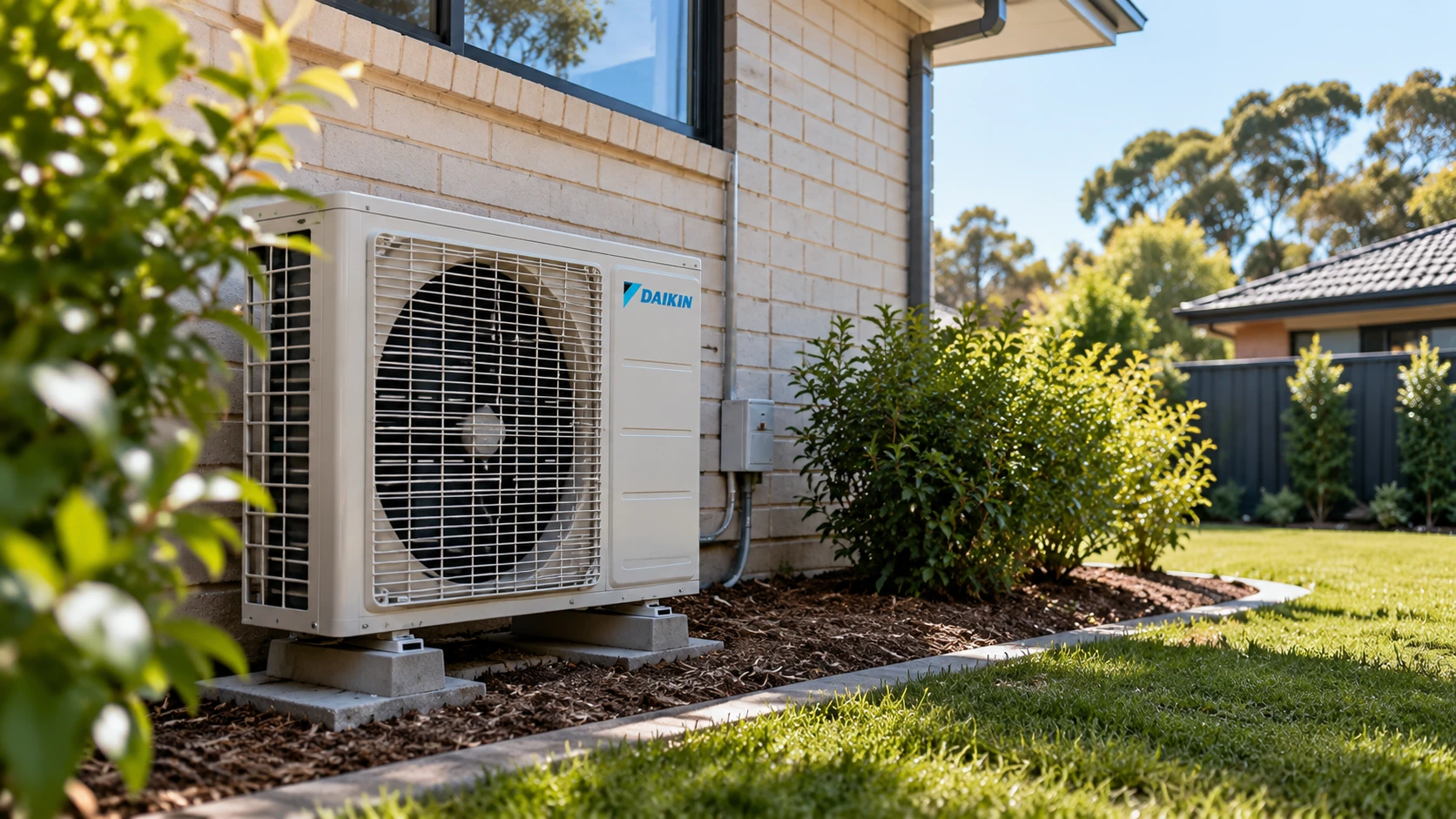
Daikin is Australia’s most trusted air conditioning brand, voted number one for four consecutive years from 2023 to 2026 in the Reader’s Digest Trusted Brands survey. If you’re weighing up which air conditioner to buy for your Southern Highlands home, this guide covers the full Daikin range, what makes their systems stand out, and what the installation process actually looks like.
Why Daikin Air Conditioners Are a Popular Choice in Australia
Daikin has been heating and cooling Australian homes for over 50 years. That history matters because it means their products are engineered for our climate, from the humid coasts to the cooler climates of the Southern Highlands and Southern Tablelands.
A few things that set Daikin apart from other brands:
- Voted Australia’s most trusted air conditioner brand four years in a row (2023 to 2026)
- Named top performing split system at the 2025 Finder Retail Awards
- Split systems are the only ones approved by the National Asthma Council Australia Sensitive Choice® program, carrying the blue butterfly symbol
- 5-year parts and labour warranty on split, multi-split and ducted systems across Australia
- Over 500 Specialist Dealers nationally, backed by a dedicated after-sales support team.
To understand what you can expect to pay for supply and installation, see our guide to aircon installation cost.
Daikin Split System Air Conditioners
A split system has two components: an indoor wall unit and an outdoor compressor, connected by refrigerant lines. It heats or cools a single room or defined area, making it the go-to choice for bedrooms, living rooms and home offices. Daikin offers six models across the range, each suited to a different situation.
Alira X
The flagship split system, built around Daikin’s Streamer air purification technology. Streamer generates high-speed electrons that continuously decompose bacteria, allergens, odours and formaldehyde from your indoor air.
- Streamer air purification removes bacteria, allergens, odours and formaldehyde
- National Asthma Council Australia Sensitive Choice® approved, the only split system with the blue butterfly symbol
- Reverse cycle: heats and cools year-round from one unit
- Wall-mounted; whisper-quiet indoor operation
- Optional smartphone control
Best for: Households with asthma, allergies or young children. Also the right choice if air quality matters as much as temperature control.
Zena
A design-led split system for modern interiors. The Zena has a slim wall profile and is available in White Hair Line or Black Wood finish, making it one of the most visually unobtrusive units in the range.
- Slim-panel design in two premium finishes: White Hair Line or Black Wood
- Quiet operation suited to bedrooms and living spaces
- Energy-efficient reverse cycle heating and cooling
- Wall-mounted
Best for: Modern homes where the unit’s appearance matters. Good fit for living rooms, master bedrooms or open-plan spaces with a contemporary fit-out.
Cora
A reliable everyday performer that balances efficiency, quiet operation and value. The Cora is available across a wide capacity range, covering small through to large rooms.
- Whisper-quiet indoor operation
- High energy efficiency for lower running costs
- Reverse cycle: heating and cooling in one unit
- Wall-mounted; suits small to large rooms
Best for: Most Southern Highlands bedrooms and living areas. The practical mid-range choice for households that want solid performance without the premium of the Alira X.
XL Series
Built specifically for large, open-plan living areas. The XL Series comes in two variants: the standard XL and the more energy-efficient XL Premium, both delivering high-capacity airflow across generous spaces.
- High-capacity airflow designed for large open-plan areas
- Two variants: XL (standard) and XL Premium (higher energy efficiency)
- Reverse cycle heating and cooling
- Wall-mounted
Best for: Large living-dining combinations, big master bedrooms or any open-plan space where a standard split system would struggle to maintain even temperatures.
Lite Systems
An economical wall-mounted option that delivers quiet, compact comfort without unnecessary extras. Designed with the latest technology in a compact modern form.
- Compact modern design with quiet operation
- Reverse cycle: heats and cools
- Wall-mounted; small installation footprint
- Economical entry point into the Daikin range
Best for: Secondary bedrooms, studies or smaller spaces where budget is the primary consideration and you still want a reputable, reliable brand.
Floor Standing
A compact unit positioned at floor level rather than on the upper wall. Particularly effective in colder climates because warm air rises from floor level, rather than descending from a high wall position.
- Floor-level positioning, no upper-wall installation required
- Effective heating from ground level in cold climates
- Compact footprint; easy access to controls
- Suits small rooms and spaces with installation constraints
Best for: Rooms where upper-wall mounting is not possible, or Southern Highlands homes in Bundanoon, Exeter and Sutton Forest where winter heating is the priority and floor-level warmth makes a real difference.
Daikin Ducted Air Conditioning
A Daikin ducted system runs from a single outdoor unit through a central indoor unit installed in the roof. Conditioned air travels through concealed ductwork to outlet grilles in each room. Once installed, only the zone controller and the grilles are visible inside your home.
Ducted systems suit larger homes, multi-level properties and open-plan layouts where you want whole-home heating and cooling from one system. Daikin’s ducted range includes:
Premium Inverter Ducted
Daikin’s top-tier ducted system, engineered for maximum energy efficiency and design flexibility. It also has R22 retrofit capability, so it can replace older ducted systems without a full duct overhaul. The Premium Inverter automatically optimises compressor speed, indoor fan speed, outdoor fan speed and refrigerant temperature to meet your home’s exact heating and cooling needs at any given time.
Inverter Ducted
A compact and efficient option, specifically engineered for tight roof spaces. If your home has a shallow ceiling cavity, this model is designed to fit where others can’t. Suits small to large homes equally.
Slimline Ducted
For installations where ceiling space is at a real premium. The Slimline series offers unparalleled layout flexibility, making it popular for bedrooms, narrow ceiling spaces and multi-room configurations.
Bulkhead Systems
Suited to drop ceilings and shallow ceiling spaces where a discreet installation is preferred. A practical choice for single-area heating and cooling in specific rooms.
Underfloor Ducted
Designed specifically for colder climates where heating is the priority. Underfloor installation means warm air rises from floor level, which is a notably effective heating method. The Premium Inverter Underfloor and Inverter Underfloor variants are both available.
If you are still working out the right capacity for your space, our guide on what size aircon do I need covers the key sizing variables.
Daikin Inverter Technology: What It Actually Means for Running Costs
Most Daikin air conditioners use inverter technology. The difference from a conventional air conditioner is significant in day-to-day running costs.
A non-inverter system runs its compressor at a fixed speed. It cycles on at full power, reaches your target temperature, then switches off entirely. When the temperature drifts, it restarts from scratch. That repeated stop-start cycle uses more electricity.
A Daikin inverter compressor adjusts its speed continuously, slowing down once your room reaches the set temperature rather than switching off. It maintains comfort with minimal fluctuation and far less energy. Daikin’s Premium Inverter ducted systems can save up to 28% on running costs compared to an equivalent non-inverter ducted model.
For a broader explanation of how reverse cycle systems work, see our guide to what is reverse cycle air conditioning.
Daikin Streamer Technology and Indoor Air Quality
Daikin’s Streamer technology is a point of genuine differentiation. It uses a high-power plasma discharge to generate high-speed electrons, which combine with nitrogen and oxygen in the air to create elements that decompose pollutants.
In practical terms, Streamer continuously removes:
- Bacteria and viruses
- Allergens including dust mites and pollen
- Odours
- Formaldehyde from furniture and building materials
- Mould spores
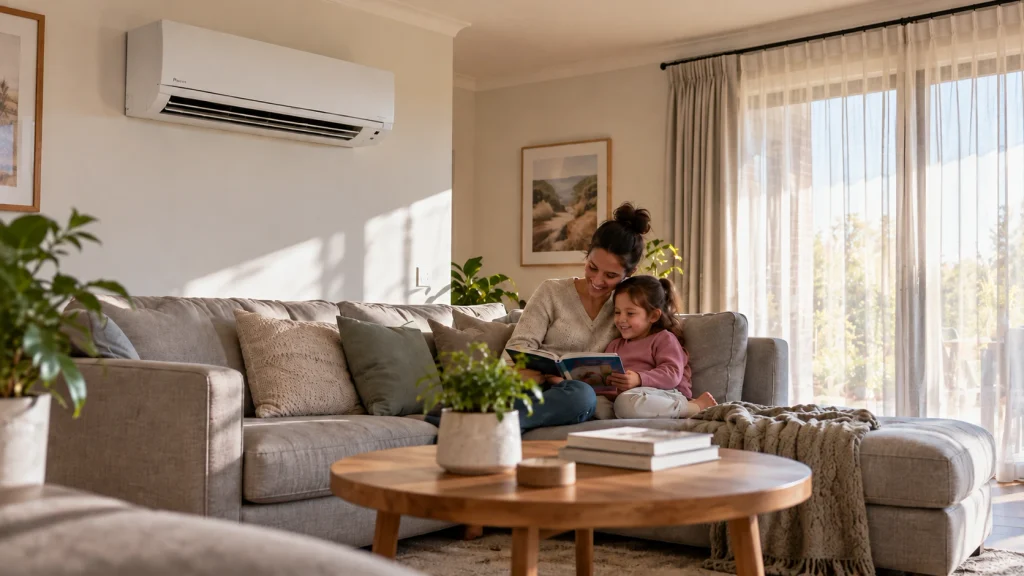
The Alira X split system includes Streamer technology as standard. It’s also the reason Daikin split systems are the only range approved by the National Asthma Council Australia’s Sensitive Choice® program. If air quality is a concern in your home, that approval is not marketing, it reflects a genuine independent assessment.
Daikin Split System vs Ducted Air Conditioning: Key Differences
Choosing between a split system and a ducted system depends on your home size, budget and what you’re trying to achieve. Browse our full range of air conditioners if you would like to compare options before reading on. Here’s a straightforward comparison:
| Feature | Split System | Ducted System |
|---|---|---|
| Coverage | Single room or area | Whole home, multiple zones |
| Visibility | Indoor wall unit visible | Only grilles and controller visible |
| Installation | Simpler, lower upfront cost | More complex, higher upfront cost |
| Zoning | One unit per zone | Multiple zones from one outdoor unit |
| Best for | Bedrooms, living rooms, additions | Large homes, new builds, renovation projects |
| Running costs | Lower for single rooms | More efficient for whole-home coverage |
| Noise | Quiet indoor operation | Very quiet, indoor unit in roof space |
| Models available | Alira X, Zena, Cora, XL, Lite, Floor Standing | Premium Inverter, Inverter, Slimline, Bulkhead, Underfloor |
Daikin Warranty: What’s Covered
Daikin backs their residential systems with a 5-year parts and labour warranty on split systems, multi-split systems and ducted air conditioners purchased and installed in Australian homes. That’s a strong warranty compared to many competitors, and it covers both parts and the labour to repair them.
To maintain your warranty, your system must be installed by a licensed tradesperson, ideally a Daikin Specialist Dealer. Self-installation or installation by an unlicensed technician will void your warranty.
Daikin also has a dedicated after-sales support team to manage servicing requests and warranty claims, which means you’re not navigating a generic call centre if something needs attention.
Regular servicing also keeps your warranty valid; our guide on how often to service your aircon explains what intervals to follow.
Daikin Operation Manuals and Zone Controllers
Every Daikin air conditioning system ships with an operation manual covering your specific model. For ducted systems, Daikin’s zone controller is the central interface for managing temperature, fan speed, zoning and scheduling throughout your home.
Daikin’s intelligent zone controllers allow:
- Independent temperature settings across up to 8 zones (depending on controller model)
- Programmable on/off timers to suit your daily routine
- Energy-saving modes including Setpoint Range Limit, Setpoint Auto Reset and Auto Off Timer
- A 7-inch colour touchscreen interface on premium controller models
- Wi-Fi connectivity for smartphone control on compatible models
If you misplace your operation manual, Daikin Australia makes all manuals available for download on their website at daikin.com.au/operation-manuals, searchable by model number.
R-32 Refrigerant: Lower Environmental Impact
Most Daikin ducted systems use R-32 refrigerant. Compared to the older R-410A refrigerant it replaces, R-32 has a significantly lower global warming potential, meaning less environmental impact if the refrigerant is ever released during servicing or disposal.
R-32 also operates more efficiently than R-410A, which contributes to lower running costs over the system’s lifetime. It’s part of why newer Daikin systems perform better on energy ratings than older equivalents.
Upgrading to a new R-32 system may also qualify you for government incentives; see the current split system rebates for 2026 to check your eligibility.
What to Expect from Daikin Air Conditioning Installation
Installation is not a DIY job. Australian law requires air conditioning refrigerant work to be carried out by a licensed refrigerant handler. Beyond the legal requirement, proper installation is critical to system performance, energy efficiency and warranty validity.
Here’s what a typical installation involves:
- Site assessment to determine the right unit size, position and duct layout (for ducted systems)
- Mounting the indoor unit and outdoor unit in agreed locations
- Running refrigerant lines, electrical connections and drainage
- For ducted systems: planning and installing ductwork through the roof space, positioning outlets in each zone
- System commissioning, testing and a run-through of the controls with you
Lead times vary depending on product availability and the complexity of the job. For ducted systems especially, allow adequate time for planning and scheduling. Booking ahead gives you the best choice of scheduling slots and ensures we can plan your installation properly.
As an authorised Daikin Specialist Dealer, TempcoFRH supplies and installs Daikin split systems and ducted air conditioning across Bowral, Mittagong, Moss Vale and the wider Southern Highlands. We know these products well, and we’re here to help you make a confident decision.
Learn more about our air conditioning services and what is included at each stage.
Frequently Asked Questions
Are Daikin air conditioners suitable for people with asthma?
Yes. Daikin split systems are the only air conditioners in Australia approved by the National Asthma Council Australia’s Sensitive Choice® program. The Alira X, with its Streamer air purification technology, is particularly suited to households with asthma or allergies, as it actively removes allergens, dust mites and airborne irritants.
What is the difference between a Daikin inverter and a standard air conditioner?
An inverter air conditioner adjusts its compressor speed continuously to maintain your target temperature efficiently. A standard (non-inverter) unit runs at a fixed speed and cycles on and off repeatedly. Daikin’s inverter systems use significantly less electricity over time, particularly in climates with cold winters and warm summers.
How long does a Daikin air conditioner last?
With regular servicing, a Daikin split system or ducted system typically lasts 10 to 15 years or more. Annual professional servicing and keeping filters clean are the two most important factors in achieving that lifespan.
Can I control my Daikin air conditioner with my phone?
Many Daikin models offer optional smartphone control via Wi-Fi. For ducted systems, this works through the zone controller. For split systems, check the specific model, as Wi-Fi connectivity varies across the range. Your installer can confirm which options are available for your chosen unit.
Does TempcoFRH service Daikin air conditioners?
Yes. As an authorised Daikin Specialist Dealer, TempcoFRH supplies, installs and services Daikin split systems and ducted air conditioning systems across Bowral, Mittagong, Moss Vale, Berrima and the wider Southern Highlands. Give us a call on 02 4862 5595 to discuss your needs.
What refrigerant do Daikin systems use?
Most current Daikin ducted systems use R-32 refrigerant, which has a lower global warming potential than the older R-410A refrigerant. Split systems may use R-32 or R-410A depending on the model. Your installer will confirm the refrigerant type for your specific unit during the site assessment.