


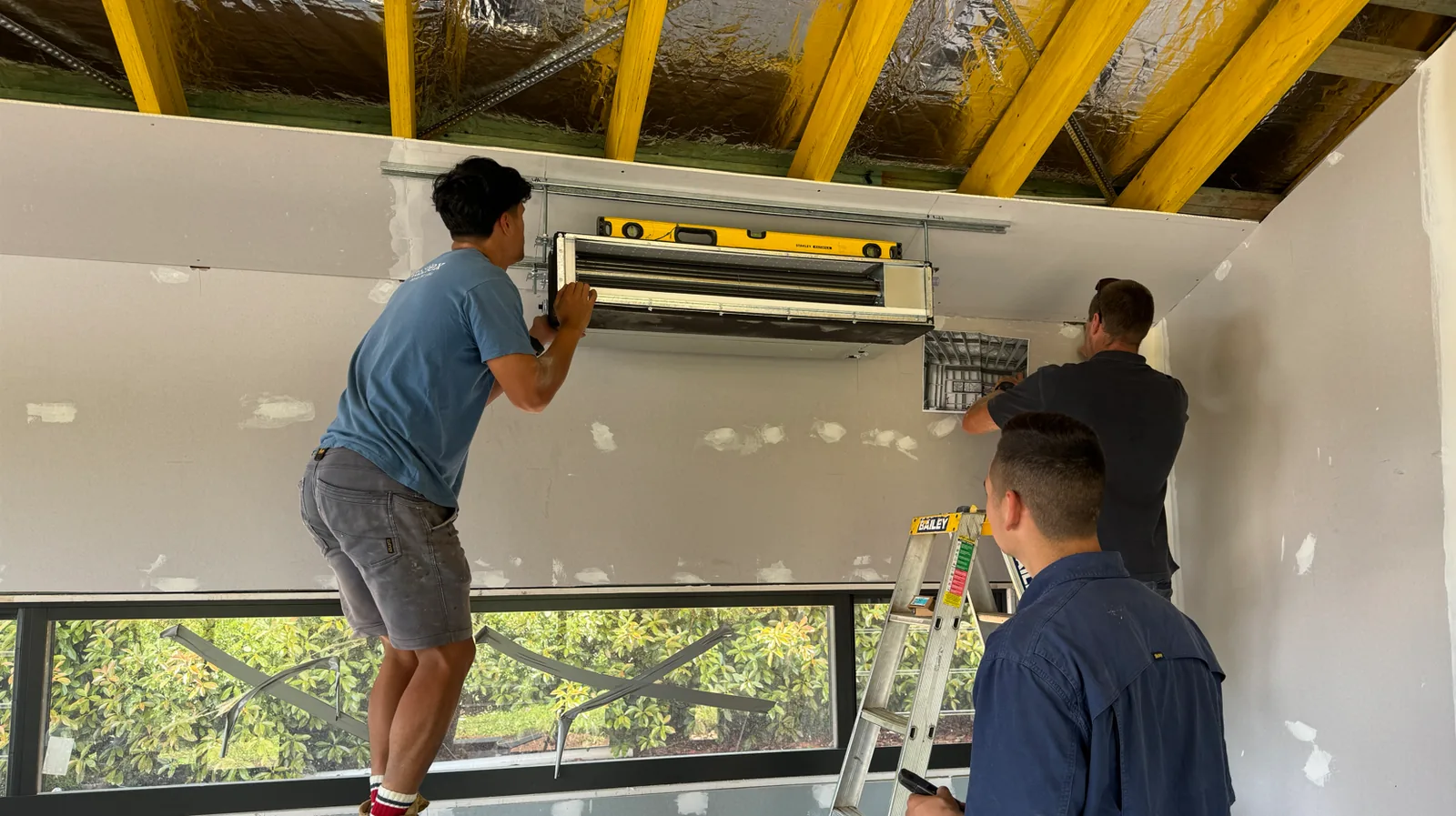
Ducted air conditioning is the most expensive type of air conditioning to install and usually the cheapest per room to run, which is why the answer to “how much does it cost” depends on the house more than the brand. A one storey, three bedroom home with good roof access is a very different job to a two storey home with no ceiling cavity, even if both end up with the same Daikin outdoor unit.
This guide goes through what you are paying for, what pushes a ducted air conditioning quote up or down, what the system costs to run once it is in, and what to expect if you are replacing an old ducted system. We install ducted reverse cycle air conditioning across the Southern Highlands, so the examples below come from the jobs we see in Bowral, Mittagong, Moss Vale and the surrounding villages.
One thing you will not find here is a price list. Every ducted system we quote is designed for the house it goes into, so a figure pulled from a national average would mislead more people than it helped. Where we can be specific about what moves the number, we are.
What you are paying for in a ducted air conditioning installation
A ducted air conditioning quote covers five things: the outdoor unit, the indoor fan coil unit that sits in the roof or under the floor, the ductwork and outlets that carry air to each room, the zone control system, and the labour to design, install and commission all of it.
The equipment is the part people compare online. The labour and design are the parts that decide whether the system works well for as long as you own the house.
- Outdoor unit. The compressor and condenser. Sized to the heating and cooling load of the whole home, measured in kilowatts.
- Indoor fan coil unit. Concealed in the roof space, or under the floor in some older Highlands homes. It needs clearance for airflow and for a technician to service it.
- Ductwork and outlets. Insulated flexible duct runs from the fan coil to a ceiling outlet in each room, plus a return air grille that pulls air back to the unit.
- Zone control. Motorised dampers in the ductwork and a wall controller that lets you heat or cool parts of the home rather than all of it.
- Electrical. A dedicated circuit, and sometimes a switchboard upgrade on older homes.
- Design, installation and commissioning. Heat load calculation, duct layout, installation, refrigerant charge, testing and handover.
If a quote looks much cheaper than the others, it is usually one of these items that has been cut. The most common casualties are duct insulation grade, outlet count and zoning.
What makes a ducted air conditioning quote go up or down
Home size and layout set the baseline, and six other factors move the final number.
Floor area and ceiling height. A larger conditioned area needs a bigger outdoor unit and more duct. Raked or 3 metre ceilings add volume that also has to be heated and cooled, so they push the system size up even when the floor plan is modest. Our guide on what size ducted air conditioner you need explains how the kilowatt rating is worked out.
Single storey or two storey. Two storey homes usually need longer duct runs, sometimes a bulkhead to get duct between floors, and more careful zoning because upstairs and downstairs have different loads. That is more labour and more material.
Roof space. A clear, accessible roof cavity is the cheapest place to install a fan coil. Tight trusses, low pitch roofs or no cavity at all mean a slimline unit, an underfloor installation or a bulkhead, and each of those costs more.
Number of zones. Every zone adds a motorised damper and controller capacity. Zoning costs more up front and is the single biggest lever on running cost later, so it is rarely the place to save. We cover this properly in our post on ducted air conditioning zoning.
Climate. The Southern Highlands has sub-zero winter mornings and summer days in the mid thirties. A ducted reverse cycle system here is sized for the heating load, not the cooling load, and that often means a larger unit than the same house would need in Sydney.
Brand and model. Daikin, Rinnai and General (Fujitsu) all offer standard and premium ducted ranges. Premium models cost more and typically bring better part load efficiency, quieter operation and more capable controllers.
Electrical work. Older homes in Bowral and Mittagong sometimes need a switchboard upgrade or a new circuit before a ducted system can be connected. That is a real cost and a good installer will tell you about it at quote stage, not on installation day.
How much does ducted air conditioning cost to run?
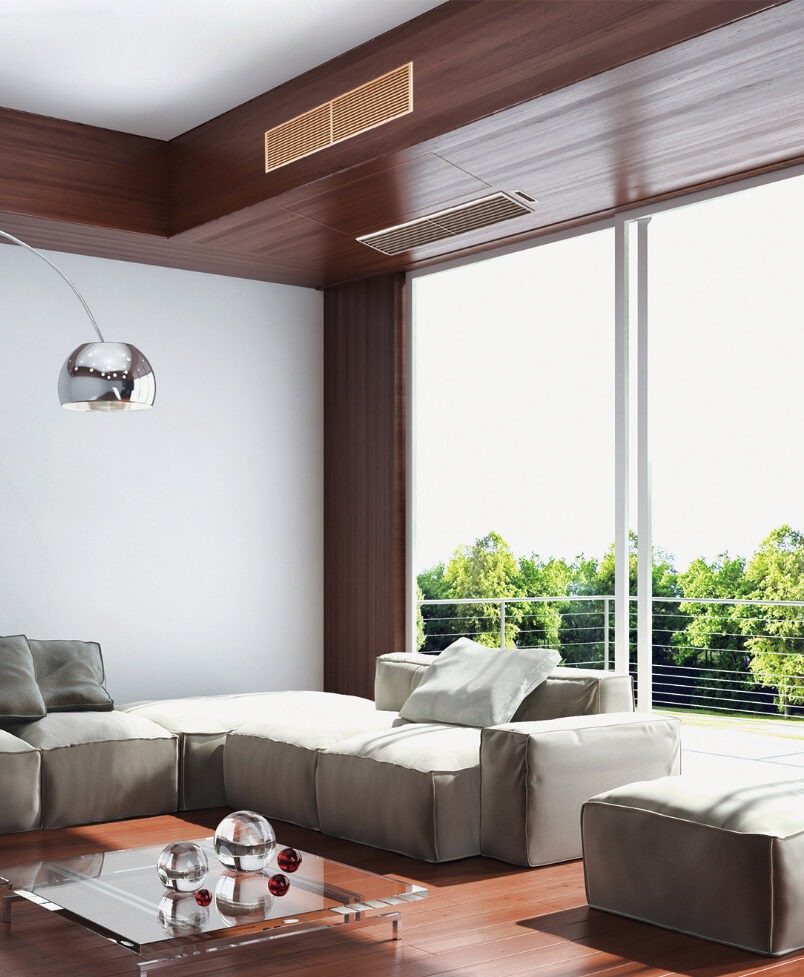
A ducted system’s running cost comes down to three numbers: the power the system draws, the hours it runs, and your electricity tariff. The power draw depends on the system’s efficiency rating and how hard it is working, and that is where zoning, insulation and sizing earn their keep.
The maths is simple enough to do yourself. Take the input power of the system in kilowatts (it is on the spec sheet, and it is lower than the heating or cooling output because a reverse cycle system moves more energy than it consumes), multiply by the hours you run it, then multiply by your per kilowatt hour rate. Inverter systems rarely run at full input power, so real bills usually land below that worst case figure.
What actually moves the bill month to month:
- Zoning. Heating two bedrooms overnight costs a fraction of heating the whole house overnight. A well zoned ducted system often runs cheaper per room than three or four split systems doing the same job.
- Sizing. An undersized system runs flat out and never reaches temperature. An oversized one short cycles and wastes energy on every start. Both cost more than a correctly sized unit.
- Insulation and glazing. Highlands homes built before insulation standards tightened lose heat fast. The system works harder to replace it.
- Set point. Each degree closer to the outdoor temperature cuts consumption. Heating to 20 rather than 23 on a frosty morning is noticeable on the bill.
- Maintenance. A blocked return air filter chokes airflow and makes the fan work harder for less output. Cleaning it is a ten minute job, and we have a guide on ducted air conditioning filter cleaning that walks through it.
- Rooftop solar. If you already have solar panels, running a reverse cycle system during the day uses electricity you are generating rather than buying.
Is ducted cheaper or more expensive than split systems?
Ducted costs more to install than one or two split systems and less to install than a split system in every room of a four bedroom home. On running cost, a zoned ducted system and a set of splits used sensibly end up closer than most people expect.
The honest answer is that the comparison depends on how many rooms you want conditioned and how you live in the house. If it is one living room and one bedroom, a split system or two is cheaper on every measure. If it is the whole home, ducted usually wins on cost per room, comfort and resale. We have written a full comparison of ducted vs split system air conditioning that works through the trade offs room by room.
What does it cost to replace a ducted air conditioning system?
Replacing a ducted system costs less than a first installation when the existing ductwork can be reused, and about the same as a new installation when it cannot.
The deciding factor is the condition of the ducts. Ductwork that is intact, properly insulated and sized for a modern unit can stay, and the job becomes a swap of the indoor and outdoor units plus a new controller. Ductwork that is crushed, leaking at the joints, undersized or running an old R22 system often needs replacing, and at that point you are close to a full installation.
Age matters too. Ducted systems installed in the Highlands in the late 1990s and 2000s are reaching the end of their working life, and a system that needs a compressor or a major refrigerant repair is usually not worth fixing. If you are weighing up repair against replacement, the ducted reverse cycle page explains what we check before recommending either.
How to get an accurate ducted air conditioning quote
An accurate quote needs a site visit. Anyone who prices a ducted system from a floor plan alone is guessing about the roof space, the insulation, the electrical capacity and the way you use the house.
When we quote a ducted system, we measure the conditioned area, check the roof or underfloor space, look at the switchboard, ask how many people live in the home and which rooms get used when, and then design the zones around that. The quote lists the equipment by model, the number of outlets and zones, and what is included in the electrical work. If something is excluded, it says so.
A few questions worth asking any installer:
- Which model is the outdoor unit, and what is its heating output at 2°C? Cold climate performance matters here more than the headline cooling figure.
- How many zones, and which rooms are grouped together?
- What grade of duct insulation is being used?
- Is the electrical work included, and does the switchboard need upgrading?
- Who does the warranty work, and are they ARC licensed?
TempcoFRH holds ARC Licence AU51396, is an AIRAH member and has been installing heating and cooling in the Southern Highlands since 1985.
Paying for your new system
TempcoFRH is an approved installer under the NSW Government’s Home Energy Saver loan program. Eligible NSW households can access zero-interest, no-fee finance of up to $15,000 from Brighte for approved upgrades, including reverse cycle air conditioning and heat pump hot water. No upfront cost on finance. Deposit may apply. Eligibility criteria apply. Check Brighte’s website for full eligibility criteria.
Call 02 4862 5595 to talk through a ducted system for your home.
Home Energy Saver loans are funded by the NSW Government and delivered by Brighte. All applications are subject to Brighte’s credit approval criteria. Late payment fees, Terms and Conditions apply. Australian Credit Licence Number 508217
Estimated savings are indicative only and vary depending on household circumstances, energy use and installation.
Frequently asked questions
Does the brand affect the installation cost? Yes, but less than the house does. The gap between a standard and premium model of the same brand is usually bigger than the gap between two brands at the same tier. Daikin, Rinnai and General (Fujitsu) all have ducted ranges we install, and we recommend based on the home, not the badge.
Can I reduce running costs by closing off rooms? Only if the system is zoned. Closing a ceiling outlet by hand on an unzoned system raises the pressure in the ductwork and can damage the fan coil. Zone dampers are designed to do this safely.
How long does a ducted installation take? It depends on the number of outlets, the roof access and whether electrical work is needed. We confirm how long your installation will take at quote stage.
Can ducted air conditioning be installed in an existing home? Yes, in most cases. The requirements are roof or underfloor space for the fan coil and duct runs, and adequate electrical supply. Homes without either can sometimes use a bulkhead installation.
Get a quote for ducted air conditioning in the Southern Highlands
TempcoFRH installs Daikin, Rinnai and General (Fujitsu) ducted reverse cycle systems, with Mitsubishi Heavy Industries available where it suits the home, across Bowral, Mittagong, Moss Vale, Berrima and the wider Southern Highlands. Call 02 4862 5595 for a quote.